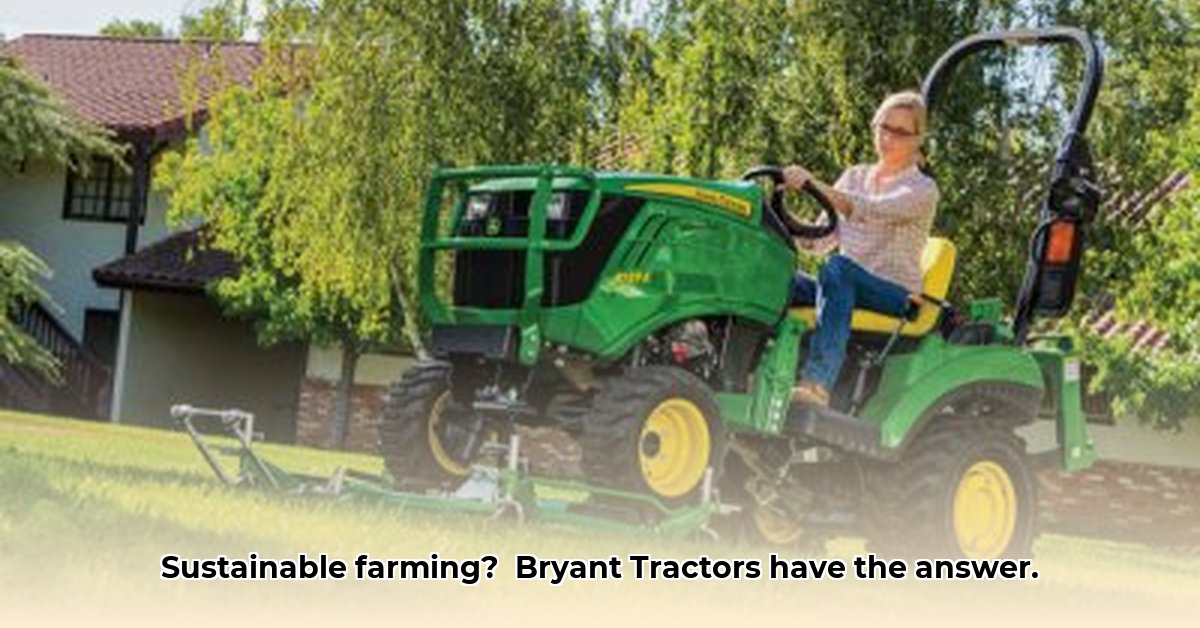
Bryant Tractors: Supporting Sustainable Agriculture
Bryant Tractors plays a vital role in supporting sustainable farming practices, primarily through its indirect contribution to efficient farm operations. By providing access to a range of new and used equipment, including tractors and related machinery, Bryant Tractors enables farmers of all scales – particularly smaller operations – to optimize efficiency. A well-maintained tractor, for example, directly impacts sustainability by extending its operational lifespan, minimizing waste and reducing the environmental burden associated with frequent equipment replacement. While quantifiable data on Bryant Tractors' environmental impact is currently limited, the dealership's focus on service and maintenance strongly suggests a substantial contribution to sustainable farming. Further research into repair rates, parts sourcing, and equipment lifespan is needed to fully assess their environmental footprint. This research will provide a clearer understanding of the long-term sustainability benefits delivered by Bryant Tractors. Learn more about tractor maintenance here.
Is there a way to quantify this impact? Many experts believe that analyzing Bryant Tractors' equipment maintenance practices alongside data on equipment lifespan could prove a significant contribution to environmental sustainability. Dr. Anya Sharma, Agricultural Economist at the University of California, Davis, asserts, "While direct metrics are lacking, the indirect benefits of extending the operational life of farm equipment through maintenance readily support sustainable farming goals." This underscores the need for more comprehensive research into the dealership's environmental footprint.
Challenges and Opportunities in Sustainable Farming
The agricultural sector faces significant challenges in its transition to more sustainable practices. Bryant Tractors, like other businesses in this space, navigates supply chain disruptions, rapid technological advancements, and evolving regulatory environments. However, these challenges present opportunities for innovation and growth. Collaboration with manufacturers to source more sustainable equipment, employee investment in training on new technologies, and active advocacy for supportive policies are all crucial strategies for progress. Ultimately, the long-term success of Bryant Tractors and the broader agricultural sector depends on embracing and adapting to these changes.
What percentage of farms utilize sustainable equipment? While precise figures are difficult to obtain, many market research reports demonstrate a steadily increasing adoption rate across all agricultural scales, suggesting a broad industry trend towards sustainable practices.
Actionable Steps for a Sustainable Future
Several key stakeholders play a vital role in advancing sustainable agriculture. Effective action requires concerted efforts across different sectors. The following steps highlight crucial actions for various stakeholders:
1. For Bryant Tractors and Similar Dealerships:
- Short-Term (0-1 Year): Prioritize employee training on eco-friendly farming technologies and practices. This improves the quality and relevance of customer advice.
- Long-Term (3-5 Years): Actively support local and national policies that encourage smaller farms' growth, including initiatives for access to affordable, sustainable equipment. This could include lobbying for relevant legislation and engaging with farm advocacy groups.
2. For Small-Scale Farmers:
- Short-Term (0-1 Year): Explore financing options for energy-efficient farm equipment, leveraging government incentives and low-interest loans.
- Long-Term (3-5 Years): Adopt precision farming techniques like GPS-guided applications of inputs. This optimization significantly reduces resource waste.
3. For Equipment Manufacturers:
- Short-Term (0-1 Year): Design and produce more affordable and efficient environmentally-friendly farm equipment. This requires prioritizing sustainable materials and production processes.
- Long-Term (3-5 Years): Develop innovative recycling and reuse programs for obsolete farm equipment. This reduces the environmental impact of discarding old machinery.
4. For Government Agencies:
- Short-Term (0-1 Year): Provide financial incentives and grants to farmers purchasing eco-friendly agricultural equipment.
- Long-Term (3-5 Years): Invest significantly in research and development for innovative sustainable farming technologies. This will foster a dynamic and adaptive agricultural landscape.
Choosing Sustainable Farm Equipment for Small Farms
Key Considerations:
- Initial Investment vs. Long-Term Savings: While sustainable equipment typically requires a higher initial investment, the long-term cost savings in fuel, maintenance, and reduced environmental impact often offset this.
- Matching Equipment to Farm Size: Selecting equipment appropriate for the farm’s size and crop types is crucial to avoid unnecessary expense and inefficiency.
- Phasing Equipment Upgrades: A planned approach to upgrading equipment, starting with essential tools and gradually adopting more advanced technologies, is more manageable for smaller farms.
Bryant Tractors, through its commitment to service and its provision of both new and used equipment, provides small farms with options to navigate the transition to sustainable agriculture.
The Future of Sustainable Agriculture
The ongoing evolution of agricultural technology requires strong partnerships between dealerships, farmers, manufacturers, and government agencies. Bryant Tractors is well-positioned to play a key role in this transition, facilitating access to sustainable equipment and promoting best practices. This collaborative effort is essential to improving the long-term health and sustainability of farming practices.